
Tech
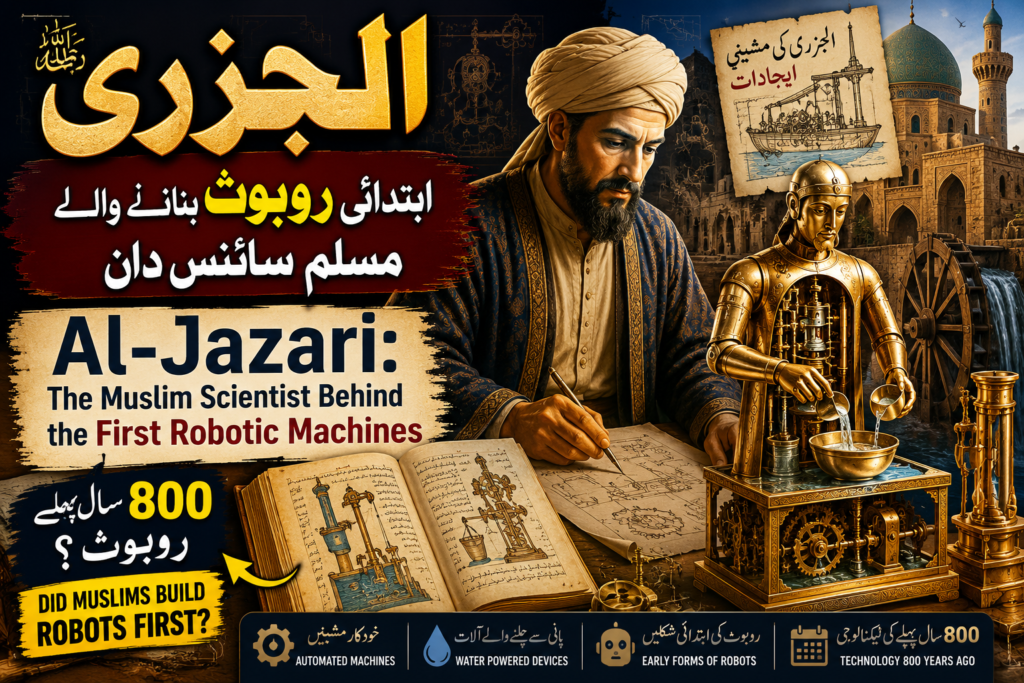
Al-Jazari: The Muslim Scientist Who Designed Early Robotics 800 Years Ago | Al-Jazari and the Origins of Robotics

When the modern world discusses robotics and artificial intelligence, it is often assumed that these are entirely products of contemporary technological advancement. However, a closer reading of history shows that more than eight centuries ago, a Muslim engineer and inventor developed automated mechanical devices that are now regarded as early foundations of robotics.
Al-Jazari (1136–1206) was a prominent engineer of Islamic civilization who designed water-powered machines, self-operating clocks, mechanical devices, and automated systems capable of performing tasks according to pre-defined instructions. His renowned work, “Kitab fi Ma‘rifat al-Hiyal al-Handasiyya” (The Book of Knowledge of Ingenious Mechanical Devices), documents more than fifty mechanical inventions in detail.
Among Al-Jazari’s most remarkable creations were an automated musical band, mechanical servants for serving water, and complex water clocks. His designs demonstrate early principles of programming logic, crankshaft mechanisms, gear systems, and automatic control processes, all of which are considered foundational elements of modern engineering and robotics.
The work of this great scholar of the Islamic Golden Age serves as a reminder that knowledge, research, and innovation are a shared legacy of human civilization. His inventions were not only centuries ahead of their time but continue to inspire engineers and scientists today.
Do you think it is accurate to describe Al-Jazari as the “Father of Robotics”?
#AlJazari #MuslimScientist #IslamicGoldenAge #Robotics #HistoryOfScience #Engineering #Innovation #Technology #STEM #Automata #MechanicalEngineering #ScientificHeritage
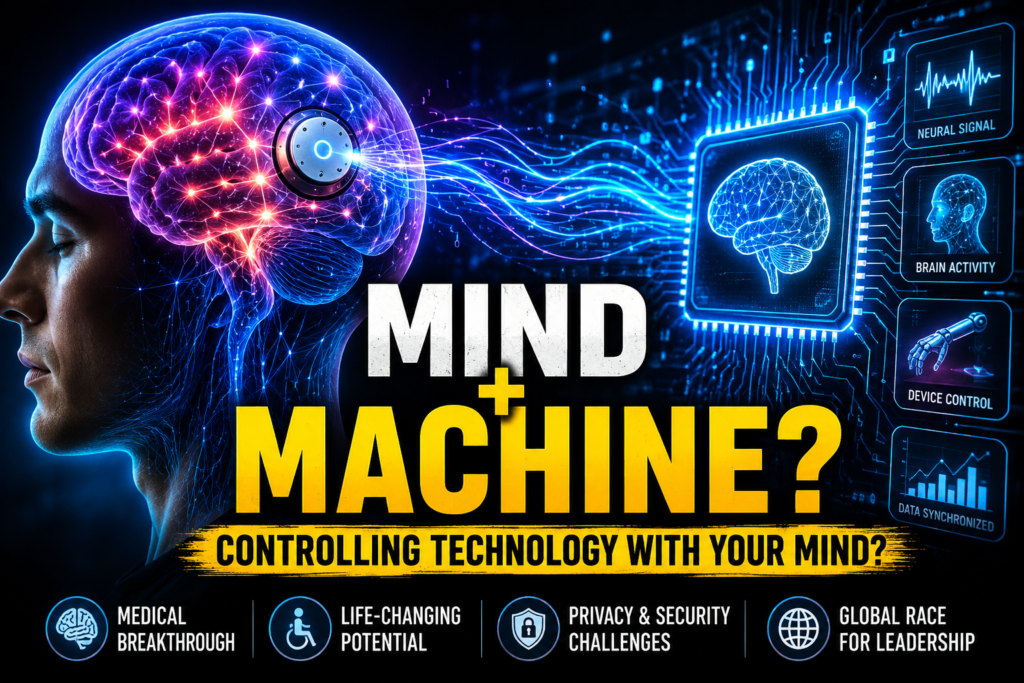
Brain-Computer Interfaces: The Next Frontier in Human–Machine InteractionBrain-Computer Interfaces (BCIs) are emerging as one of the most transformative technologies of the 21st century. These systems create a direct communication pathway between the human brain and external devices, allowing neural signals to control computers, prosthetic limbs, or other technologies without traditional physical input. Recent advances in artificial intelligence, neuroscience, and microelectronics have accelerated BCI development, enabling paralyzed individuals to communicate, operate digital devices, and even regain limited motor functions through thought alone. Companies such as [Neuralink](https://neuralink.com?utm_source=chatgpt.com) and research institutions around the world are investing heavily in this field, viewing it as a potential breakthrough for medicine and human augmentation.Beyond healthcare, BCIs could fundamentally reshape how humans interact with technology. Supporters argue that direct brain-to-computer communication may increase productivity, improve learning, and help humans keep pace with increasingly sophisticated artificial intelligence systems. However, the technology also raises profound ethical and political questions. Issues such as mental privacy, data security, surveillance, and unequal access to cognitive enhancement could become major challenges for governments and societies. From a broader perspective, countries that lead in BCI research may gain significant advantages in healthcare, military applications, and technological innovation, making brain-computer technology an emerging arena of global competition. As BCIs move from laboratories to real-world applications, they may redefine the boundaries between human capability and machine intelligence.#Hashtags#BrainComputerInterface #BCI #ArtificialIntelligence #Neuralink #FutureTechnology #Innovation #Neuroscience #TechTrends #DigitalFuture #EmergingTechnology #HumanMachineInteraction #TechnologyNews #AIRevolution #FutureOfTechnology #TechAnalysis
-
Uncategorized3 months ago
Iran War and America’s Energy Vulnerability: A Strategic Shock to U.S. Gas Prices
-
Business3 months ago
Embedded Insurance and Embedded Payments: The Invisible Revolution Transforming Customer Experience
-
Politics3 months ago
Voter Turnout Trends Among Gen Z and Younger Millennials in the USA: A New Political Force
-
Politics3 months ago
🇵🇰🇬🇧 The Pakistani Diaspora in the UK: A Community of Influence, Contribution, and Resilience
-
Politics3 months ago
The Hidden Agenda Behind the Abraham Accords: Power, Security, and Regional Realignment
-
Politics3 months ago
🇮🇷 Iran at a Strategic Crossroads: Escalation Without Resolution
-
Entertainment3 months ago
The Rise of Streaming and the Decline of Traditional Cinema
-
Politics3 months ago
Technology Creates Power, Morality Gives It Meaning: Lessons from Israel and the Muslim World