
Politics
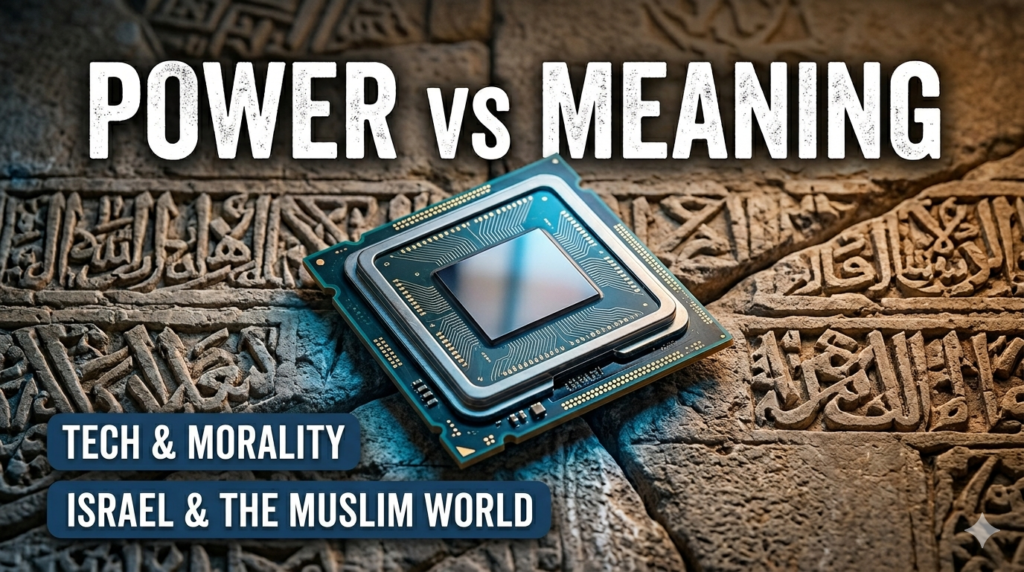
Technology Creates Power, Morality Gives It Meaning: Lessons from Israel and the Muslim World

Israel, a country of fewer than 10 million people with limited natural resources, has become one of the world’s leading centers of technological innovation. Through investment in education, research, and entrepreneurship, it transformed human capital into strategic power.
In contrast, the Muslim world possesses vast natural resources, strategic geography, and a population exceeding 1.8 billion. Yet much of this potential remains underutilized in the fields of science, technology, and innovation.
The comparison highlights a critical lesson of the 21st century: the most valuable resource is not oil beneath the ground but knowledge within the population. Nations that invest in human capital gain influence far beyond their size.
However, technological advancement alone is not enough. Development without morality, justice, and ethical responsibility risks becoming an instrument of domination rather than progress. True success lies not only in acquiring power but also in using it wisely and for the benefit of humanity.
#TechnologyCreatesPower #MoralityGivesItMeaning #Israel #MuslimWorld #Innovation #HumanCapital #KnowledgeEconomy #Technology #Geopolitics #PoliticalScience #InternationalRelations #GlobalDevelopment #Education #Research #EconomicGrowth #StrategicStudies #FutureOfNations #PowerAndMorality #InnovationEconomy #ThePoliticalClassroom
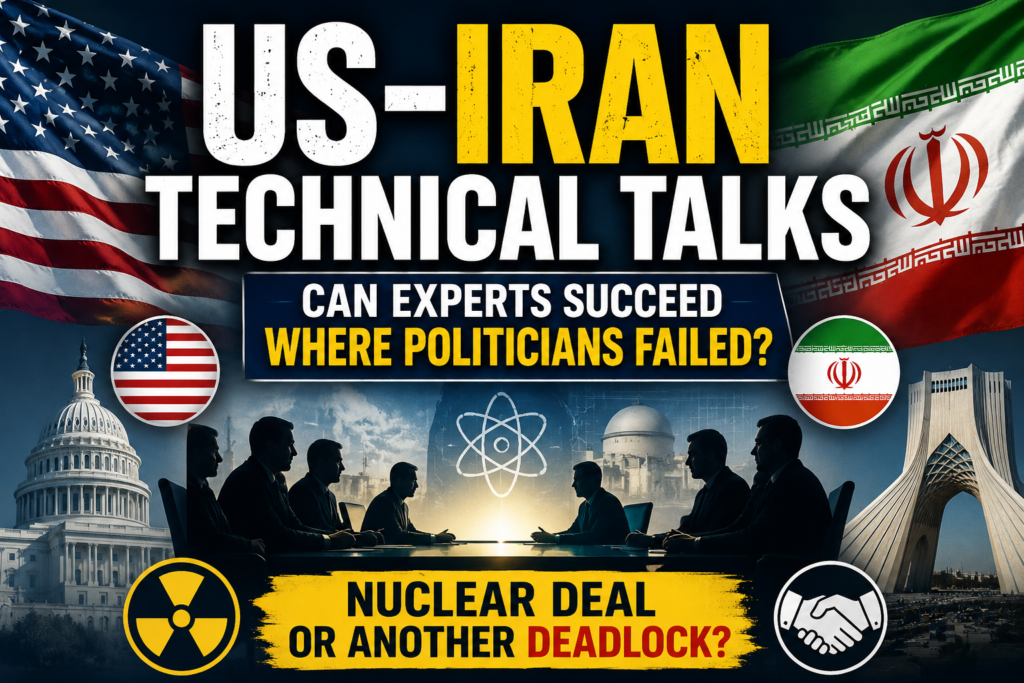
US–Iran Technical Dialogues: Can Technical Negotiations Lead to a Lasting Agreement?
Introduction
After months of military tensions, regional instability, and concerns over nuclear escalation, the United States and Iran have entered a new phase of engagement through technical dialogues. Unlike high-profile political meetings, technical negotiations focus on the practical details necessary to transform broad political understandings into workable agreements. Recent diplomatic developments suggest that both sides have agreed on a framework and roadmap for continued discussions, with expert-level talks now playing a central role in determining whether a durable settlement can emerge.
What Are Technical Dialogues?
Technical dialogues involve specialists rather than political leaders. These discussions typically include nuclear scientists, sanctions experts, military officials, maritime security specialists, and legal advisers. Their task is to translate political commitments into detailed implementation mechanisms. In the current US–Iran context, technical teams are reportedly examining issues such as nuclear monitoring, uranium enrichment limits, sanctions relief procedures, maritime security in the Strait of Hormuz, and verification arrangements.
Key Issues Under Discussion
The most sensitive issue remains Iran’s nuclear program. Technical experts are expected to negotiate acceptable enrichment levels, the management of existing uranium stockpiles, the future of advanced centrifuges, and inspection procedures by the International Atomic Energy Agency. These technical details are crucial because they determine whether both sides can trust compliance mechanisms in any future agreement.
Another major topic is the security of the Strait of Hormuz, through which a significant portion of global oil trade passes. Discussions reportedly include maritime safety arrangements, communication mechanisms, and procedures designed to prevent accidental escalation. Recent proposals even include direct communication channels between Washington and Tehran to manage crises and protect shipping lanes.
Sanctions relief also remains a critical component. Iran seeks greater economic access, oil export flexibility, and the release of financial resources, while the United States wants verifiable commitments regarding nuclear activities and regional security concerns. Technical teams must determine how sanctions relief can be phased and monitored.
Pakistan’s Diplomatic Role
Pakistan has emerged as a significant supporter of the negotiation process. Recent reports indicate that Pakistani diplomacy has contributed to facilitating dialogue and encouraging both sides to remain engaged. Pakistani officials have welcomed progress achieved in Switzerland and expressed support for continued technical negotiations aimed at reaching a comprehensive settlement within the agreed timeframe.
Challenges Facing the Talks
Despite diplomatic progress, substantial obstacles remain. Differences persist regarding missile programs, inspection arrangements, sanctions, regional security issues, and the role of non-state actors in the Middle East. Furthermore, recent interruptions and cancellations of planned meetings demonstrate how quickly developments on the ground can disrupt diplomatic momentum.
Another challenge is the limited timeframe. Experts note that technical issues involving nuclear verification and monitoring are highly complex and historically required years of negotiation during earlier agreements. Achieving similar outcomes within a few months will require sustained political commitment from both sides.
Conclusion
The ongoing US–Iran technical dialogues represent an important shift from confrontation toward problem-solving diplomacy. While political leaders may agree on broad principles, it is the technical experts who must resolve the complex details involving nuclear safeguards, sanctions implementation, maritime security, and verification mechanisms. Success in these negotiations could reduce regional tensions, stabilize energy markets, and create conditions for a broader diplomatic settlement.
However, the path forward remains uncertain. Technical expertise can solve practical problems, but political trust remains limited. The ultimate success of these dialogues will depend not only on technical solutions but also on the willingness of both Washington and Tehran to make difficult political compromises. If successful, these negotiations could become one of the most significant diplomatic developments in the Middle E
Equality, Dignity, and Social Cohesion in Germany and Europe
Every year on 18 June, the world observes the International Day for Countering Hate Speech, a reminder that words are not merely expressions of opinion; they shape societies, influence perceptions, and determine how communities interact with one another. In an increasingly interconnected world, hate speech has emerged as one of the most significant threats to social harmony, democratic values, and human dignity. While freedom of expression remains a cornerstone of democratic societies, it must not become a shield for discrimination, exclusion, or hostility against individuals based on their religion, ethnicity, nationality, race, gender, or cultural identity.
Europe has long been celebrated for its commitment to human rights, pluralism, and democratic governance. Yet, recent years have witnessed growing social polarization across the continent. Economic uncertainty, migration debates, political extremism, and the rapid spread of misinformation through social media have contributed to the rise of hate-filled narratives. These developments challenge the very principles upon which modern European societies are built. The International Day for Countering Hate Speech therefore serves not only as a symbolic observance but also as a call to action for governments, institutions, media organizations, and citizens.
Germany occupies a particularly important position in this discussion. As one of Europe’s most influential democracies, Germany has consistently advocated for tolerance, inclusion, and respect for human rights. The country’s historical experiences have shaped a strong commitment to combating racism, antisemitism, Islamophobia, xenophobia, and all forms of discrimination. However, Germany, like many other European nations, continues to face challenges arising from social divisions, anti-immigrant rhetoric, online radicalization, and identity-based discrimination. These issues require thoughtful responses that balance freedom of expression with the protection of vulnerable communities.
The strength of Germany lies in its diversity. Millions of people from different ethnic, religious, and cultural backgrounds contribute to German society, economy, and culture. Individuals of Turkish, Arab, African, Asian, Eastern European, and other origins are now an integral part of the country’s social fabric. Similarly, religious diversity—including Christians, Muslims, Jews, Hindus, Buddhists, and people of no religious affiliation—reflects the multicultural reality of contemporary Germany. A democratic society can only flourish when all citizens and residents are treated equally, irrespective of their background.
Equality is not merely a legal principle; it is a social responsibility. Every individual deserves to be treated with dignity and respect. Whether someone is a refugee seeking safety, a migrant pursuing economic opportunities, a member of a religious minority, or a citizen with different political views, their humanity must never be questioned. Hate speech seeks to divide people into categories of “us” and “them.” It fuels suspicion, prejudice, and social exclusion. Countering hate speech therefore requires promoting a culture where differences are viewed as strengths rather than threats.
The digital age has amplified both opportunities and risks. Social media platforms have enabled unprecedented communication and participation, but they have also become channels for spreading misinformation, conspiracy theories, and hateful narratives. A single hateful message can reach millions within minutes, reinforcing stereotypes and creating hostility toward entire communities. Countering this phenomenon requires responsible digital citizenship, media literacy, and ethical use of technology. Governments and technology companies must work together to ensure that online spaces remain respectful, safe, and inclusive while preserving legitimate freedom of expression.
Educational institutions also play a crucial role. Schools, universities, and community organizations should foster intercultural dialogue and critical thinking. Young people must learn not only the value of diversity but also the consequences of prejudice and discrimination. By encouraging empathy, understanding, and mutual respect, societies can reduce the appeal of extremist narratives and strengthen social cohesion.
Europe’s future depends on its ability to embrace diversity while maintaining unity. The continent’s prosperity has always been linked to openness, innovation, and cooperation among different peoples and cultures. Building walls of hatred, exclusion, and intolerance undermines these achievements. Instead, European societies must continue investing in dialogue, inclusion, and equal opportunities for all.
On this International Day for Countering Hate Speech, the message is simple yet powerful: every human being deserves equal treatment, equal dignity, and equal respect. The fight against hate speech is not solely the responsibility of governments or institutions; it is a collective responsibility shared by all members of society. By choosing understanding over prejudice, dialogue over hostility, and respect over hatred, we can contribute to stronger, more inclusive communities in Germany, across Europe, and throughout the world.
The true measure of a democratic society is not how it treats the majority, but how it protects the rights and dignity of minorities and vulnerable groups. Let us therefore reaffirm our commitment to a Europe where diversity is celebrated, differences are respected, and every individual is valued equally. In doing so, we strengthen not only our societies but also the universal principles of human rights, justice, and human dignity.
Hashtags
#InternationalDayAgainstHateSpeech
#CounteringHateSpeech
#NoToHate
#UnitedAgainstHate
#EqualityForAll
#HumanDignity
#SocialCohesion
#RespectDiversity
#InclusionMatters
#Germany
#Deutschland
#EuropeUnited
#EuropeanValues
#HumanRights
#StopDiscrimination
#StopRacism
#StopIslamophobia
#StopAntisemitism
#TogetherForPeace
#StrongerTogether
#DiversityIsStrength
#Tolerance
#Democracy
#OneHumanity
#EuropeForAll
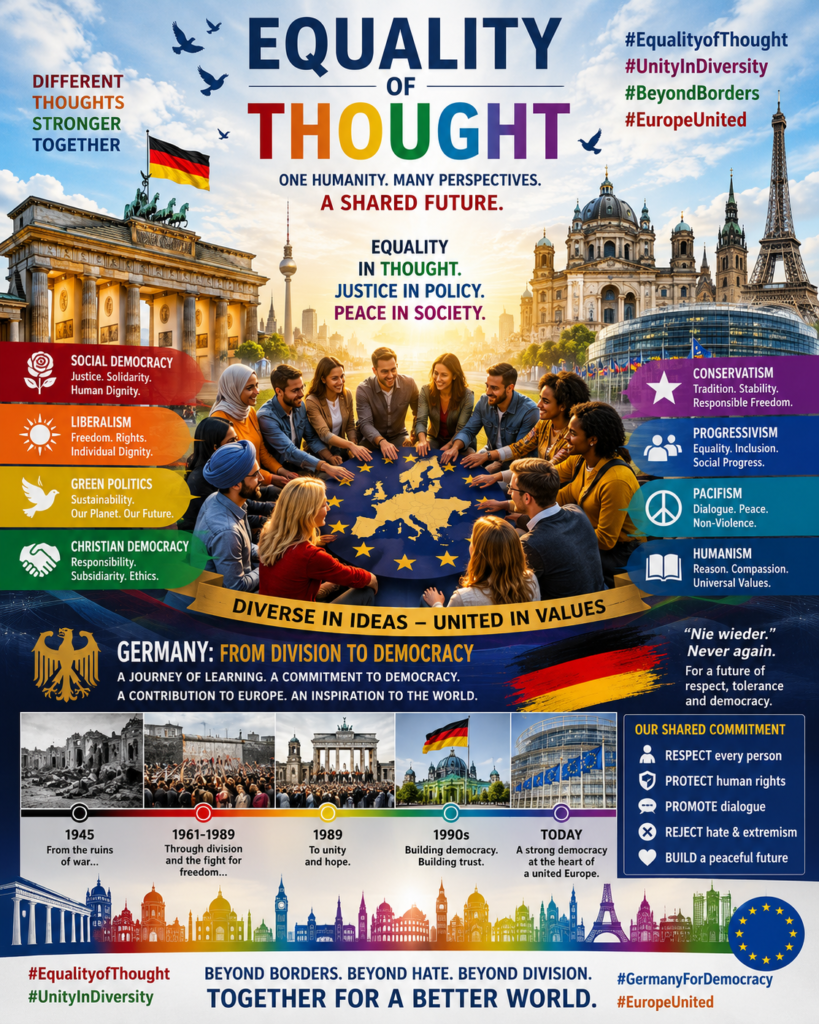
Gleichheit im Denken
Eine Menschheit. Viele Perspektiven. Eine gemeinsame Zukunft.
Unterschiedliche Gedanken – gemeinsam stärker.
Gleichheit im Denken.
Gerechtigkeit in der Politik.
Frieden in der Gesellschaft.
Vielfältige Ideen – Vereint durch gemeinsame Werte
Jeder Mensch hat das Recht, seine Gedanken und Überzeugungen frei zu äußern. Eine demokratische Gesellschaft wird nicht durch Gleichförmigkeit stärker, sondern durch Respekt gegenüber unterschiedlichen Meinungen. Vielfalt im Denken fördert Innovation, Verständnis und sozialen Zusammenhalt. Wenn wir einander mit Würde und Respekt begegnen, können wir Brücken bauen statt Mauern errichten.
Unser gemeinsames Engagement
✓ Jeden Menschen respektieren
✓ Menschenrechte schützen
✓ Dialog fördern
✓ Hass und Extremismus ablehnen
✓ Eine friedliche Zukunft gestalten
Jenseits von Grenzen. Jenseits von Hass. Jenseits von Spaltung.
Gemeinsam für eine bessere Welt.
Hashtags
#GleichheitImDenken
#VielfaltUndRespekt
#GemeinsamGegenHass
#DeutschlandFürVielfalt
#EuropaVereint
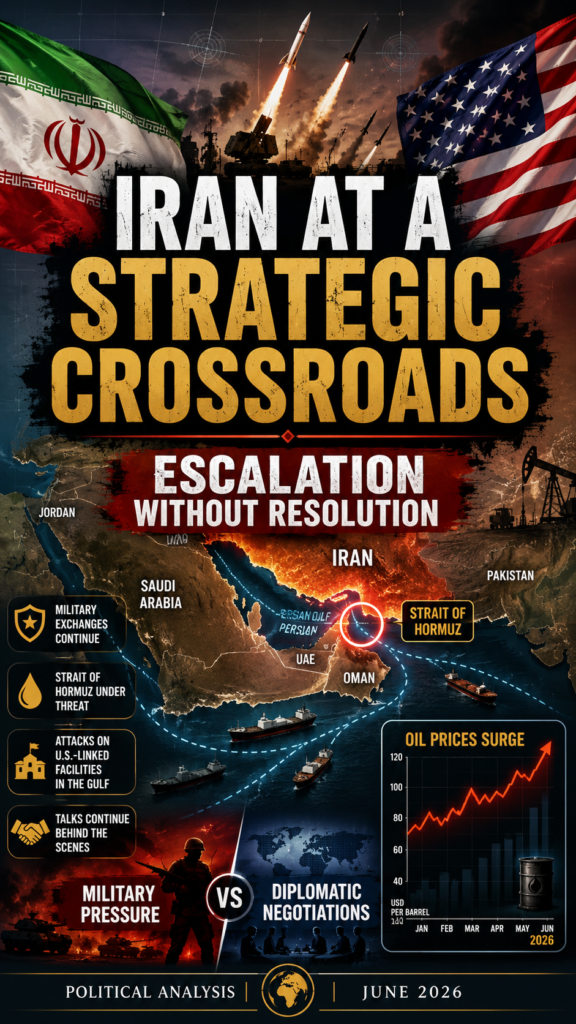
The latest developments involving Iran highlight one of the most important realities of contemporary international politics: military confrontation can alter strategic calculations, but it rarely resolves deep-rooted political disputes. Recent exchanges between Iran and the United States have once again raised concerns about regional stability, global energy security, and the future of diplomacy in the Middle East.
Iran’s actions demonstrate its determination to project strategic resilience despite sustained external pressure. By leveraging its geographical position near the Strait of Hormuz—through which a significant portion of the world’s energy supplies passes—Iran continues to remind both regional and global actors that it remains a central player in Middle Eastern security dynamics. Any instability in this vital maritime corridor has immediate consequences for international trade, energy markets, and global economic confidence.
At the same time, the United States appears to be pursuing a strategy that combines military deterrence with diplomatic engagement. This approach seeks to maintain pressure on Tehran while leaving space for negotiations. However, history has repeatedly shown that excessive coercion can strengthen nationalist sentiment and reduce the likelihood of rapid political concessions.
Perhaps the greatest danger lies not in a direct confrontation between Washington and Tehran, but in the gradual expansion of the conflict across the region. Gulf states, regional militias, maritime shipping routes, and critical energy infrastructure could increasingly become involved, transforming a bilateral dispute into a broader regional security crisis. Such a scenario would have consequences extending far beyond the Middle East, affecting global markets, investment flows, and international political stability.
From an International Relations perspective, the current situation reflects the continuing relevance of power politics, deterrence, and strategic bargaining. Yet it also illustrates the limitations of military force as a tool of conflict resolution. Despite heightened tensions and repeated exchanges of force, both sides continue to leave diplomatic channels open. This suggests that while military actions dominate headlines, the ultimate outcome will likely depend on negotiations rather than battlefield victories.
The unfolding crisis serves as a reminder that sustainable peace requires more than military superiority. It requires political dialogue, mutual restraint, and recognition that long-term regional stability cannot be achieved through force alone.
#Iran #MiddleEast #Geopolitics #InternationalRelations #GlobalSecurity
-
Uncategorized3 months ago
Iran War and America’s Energy Vulnerability: A Strategic Shock to U.S. Gas Prices
-
Business3 months ago
Embedded Insurance and Embedded Payments: The Invisible Revolution Transforming Customer Experience
-
Politics3 months ago
Voter Turnout Trends Among Gen Z and Younger Millennials in the USA: A New Political Force
-
Politics3 months ago
🇵🇰🇬🇧 The Pakistani Diaspora in the UK: A Community of Influence, Contribution, and Resilience
-
Politics3 months ago
The Hidden Agenda Behind the Abraham Accords: Power, Security, and Regional Realignment
-
Politics3 months ago
🇮🇷 Iran at a Strategic Crossroads: Escalation Without Resolution
-
Entertainment3 months ago
The Rise of Streaming and the Decline of Traditional Cinema
-
Sports2 months ago
🏆⚽ FIFA World Cup 2026: Germany Impresses, England Shines, and the Drama Continues🏆⚽ FIFA-Weltmeisterschaft 2026: Deutschland überzeugt, England glänzt und das Drama geht weiter
Sandra bullock
June 1, 2026 at 2:13 pm
Ahhh. The debate between morality and Power.
MUHAMMAD Shakeel SIDDIQUI
June 2, 2026 at 9:01 am
so true