
Business
⚽ Every World Cup Match Has a Pakistani Connection


While Pakistan is not competing in the FIFA World Cup 2026, it is playing an important role behind the scenes. Every time a player scores a goal, makes a pass, or lifts the trophy, there is a good chance that the football being used was made in Pakistan.
The city of Sialkot has earned a global reputation as the world’s football manufacturing capital. Industry estimates suggest that nearly 70% of the world’s hand-stitched footballs originate from Sialkot. Each year, Pakistan exports around 40 million footballs to international markets, generating significant foreign exchange earnings and supporting thousands of skilled jobs.
Pakistan’s contribution reached another milestone when the official FIFA World Cup 2026 match ball was produced in Sialkot. Local manufacturer Forward Sports has partnered with Adidas for multiple World Cups, showcasing Pakistan’s ability to meet the highest international quality standards.
The economic benefits extend beyond export revenue. The World Cup serves as a global advertisement for Pakistani craftsmanship. With billions of viewers watching matches worldwide, Pakistan receives valuable international exposure without spending millions on marketing campaigns. This strengthens the global reputation of “Made in Pakistan” products and helps attract future orders in the sports goods industry.
Yet there is also a challenge. Despite being one of the world’s leading football manufacturers, Pakistan has never qualified for a FIFA World Cup. The contrast is striking: Pakistan makes the ball used by the world’s best players, but its own football infrastructure, youth development programs, and professional leagues still lag behind many other nations.
Pakistan’s success in football manufacturing proves that the country can compete globally when it combines skill, quality, and innovation. The next step is to invest in football development at home so that one day Pakistan’s contribution to the World Cup is not limited to making the ball—but also includes playing on the field.
Business
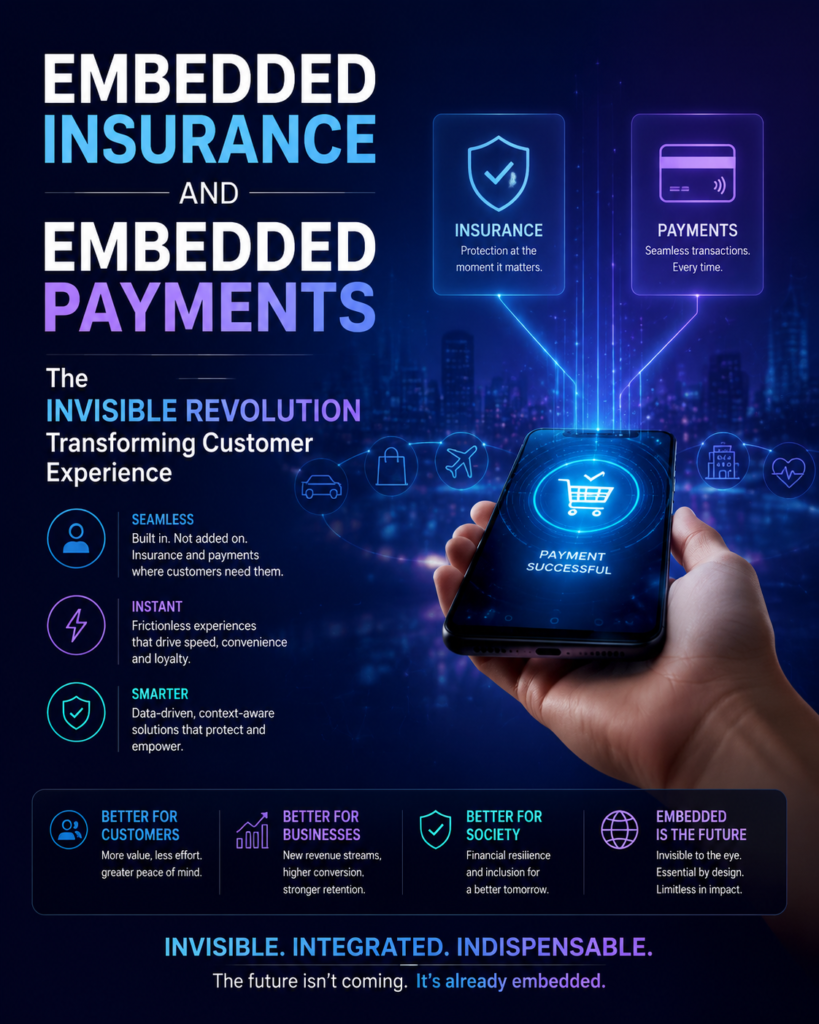
Embedded Insurance and Embedded Payments: The Invisible Revolution Transforming Customer Experience
The financial services industry is undergoing a major transformation as embedded insurance and embedded payments redefine how consumers access protection and complete transactions. Traditionally, purchasing insurance required a separate process involving research, applications, and payment arrangements. Today, however, insurance is increasingly becoming a seamless part of everyday digital experiences. Whether booking a flight, purchasing a smartphone, renting a vehicle, or shopping online, customers can now obtain relevant insurance coverage at the exact moment they need it, often without leaving the platform they are already using.
Embedded insurance refers to the integration of insurance products directly into the purchase journey of another product or service. Instead of searching for insurance independently, consumers are offered tailored coverage options during checkout or within a digital platform. This approach significantly reduces friction and increases convenience, making insurance more accessible to a broader audience. At the same time, embedded payments enable customers to pay for both the primary purchase and the associated insurance through a single, streamlined transaction. The combination creates a frictionless experience that benefits consumers, businesses, and insurers alike.
The growing popularity of embedded insurance is largely driven by changing consumer expectations. Modern customers increasingly demand convenience, speed, and personalization in every aspect of their digital lives. They are accustomed to one-click purchases, instant approvals, and mobile-first experiences. As a result, lengthy insurance applications and separate payment processes feel outdated. Embedded insurance aligns with these expectations by presenting relevant protection options at the point of need, eliminating unnecessary steps and simplifying decision-making.
Advancements in artificial intelligence are accelerating the adoption of embedded insurance and payments worldwide. AI-powered systems can analyze customer behavior, transaction history, purchasing patterns, and risk factors in real time to offer highly personalized insurance products. For example, a traveler purchasing a flight may receive customized travel protection based on destination risks, while a consumer buying an expensive electronic device may be offered a tailored protection plan. This data-driven approach improves customer relevance while helping insurers increase conversion rates and enhance risk assessment.
Businesses across industries are embracing embedded insurance as a strategic growth opportunity. E-commerce platforms can increase customer confidence while generating additional revenue through insurance partnerships. Fintech companies are integrating insurance into digital wallets and payment ecosystems, creating comprehensive financial services experiences. Insurers benefit from access to customers at the exact moment protection becomes relevant, reducing acquisition costs and improving policy uptake. Meanwhile, consumers gain access to convenient, contextually relevant coverage without the complexity traditionally associated with insurance purchases.
Another important development is the rise of real-time payments within the insurance ecosystem. Customers increasingly expect claims settlements to be processed within minutes rather than days or weeks. Advances in payment technology now enable insurers to deliver claim payouts directly to bank accounts, cards, or digital wallets almost instantly. This capability not only improves customer satisfaction but also strengthens trust in insurance providers. As digital payment infrastructure continues to evolve, the integration of embedded payments with insurance products is expected to become even more seamless.
Despite its rapid growth, the embedded insurance model presents several challenges. Transparency remains critical, as customers must clearly understand the terms, coverage limits, exclusions, and claim procedures associated with embedded products. Regulators around the world are also paying closer attention to consumer protection, data privacy, and the use of artificial intelligence in insurance recommendations. Companies operating in this space must balance convenience with responsible practices to ensure long-term trust and compliance.
Looking ahead, embedded insurance and embedded payments are expected to play a central role in the broader evolution of embedded finance. As technology platforms become more interconnected and customer journeys become increasingly digital, insurance will transition from a standalone financial product to an integrated layer of protection embedded within everyday transactions. Consumers may no longer actively shop for insurance; instead, protection will be intelligently presented whenever and wherever it is most relevant.
The future of insurance is becoming increasingly invisible yet more accessible than ever before. Embedded insurance and embedded payments are not simply improving existing processes—they are fundamentally changing how protection is distributed, purchased, and experienced. Organizations that successfully integrate these capabilities into customer journeys will be well positioned to capture new growth opportunities in the next era of digital financial services.
-
Uncategorized3 months ago
Iran War and America’s Energy Vulnerability: A Strategic Shock to U.S. Gas Prices
-
Business3 months ago
Embedded Insurance and Embedded Payments: The Invisible Revolution Transforming Customer Experience
-
Politics3 months ago
Voter Turnout Trends Among Gen Z and Younger Millennials in the USA: A New Political Force
-
Politics3 months ago
🇵🇰🇬🇧 The Pakistani Diaspora in the UK: A Community of Influence, Contribution, and Resilience
-
Politics3 months ago
The Hidden Agenda Behind the Abraham Accords: Power, Security, and Regional Realignment
-
Politics3 months ago
Technology Creates Power, Morality Gives It Meaning: Lessons from Israel and the Muslim World
-
Politics3 months ago
🇮🇷 Iran at a Strategic Crossroads: Escalation Without Resolution
-
Entertainment3 months ago
The Rise of Streaming and the Decline of Traditional Cinema